We Need Your Support
Donations are tax deductible and you will receive a charitable tax receipt for 100% of your gift.

Act Now

Empower U: Learn to Access Your Disability Rights Training on Canadian Human Rights, the Convention on the Rights of Persons with Disabilities (CRPD) and its Optional Protocol (OP) training aims to increase awareness of how to address discrimination using more familiar Canadian human rights laws such as Human Rights Codes and the newer international Convention on the Rights of Persons with Disabilities (CRPD). This is training for persons with disabilities by persons with disabilities. The training is part of a project funded by Employment and Social Development Canada and implemented by the Council of Canadians with Disabilities (CCD) in collaboration with Canadian Multicultural Disability Centre Inc. (CMDCI), Citizens With Disabilities – Ontario (CWDO), Manitoba League of Persons with Disabilities (MLPD) and National Educational Association of Disabled Students (NEADS). Read more.
Court Rules that BC's Laws Governing Involuntary Psychiatric Treatment Are Unconstitutional
July 31, 2026
FOR IMMEDIATE RELEASE
July 31, 2026
Unceded territories of the ʷməθkʷəy̓əm (Musqueam), Sḵwx̱wú7mesh (Squamish), and səlilwətaɬ (Tsleil-Waututh) Nations – Today, the BC Supreme Court ruled in Council of Canadians with Disabilities v. Attorney General of British Columbia, finding that BC’s laws governing involuntary psychiatric treatment violate the Canadian Charter of Rights and Freedoms.
In a landmark decision, the BC Supreme Court ruled that people detained involuntarily under BC’s Mental Health Act have fundamental rights to consent to their medical treatment. The law was found to have violated Charter rights of life, liberty and security of the person, and their right to equality.
“For decades, people detained under BC’s Mental Health Act have been denied one of the most fundamental rights we all share: the right to make decisions about our own medical care,” said Kevin Love, one of the CLAS lawyers representing CCD. “Today’s decision recognizes that Charter rights do not stop at the hospital door.”
BC’s outdated and regressive approach strips involuntary patients of the health care consent rights enjoyed by every other British Columbian. Unlike other patients, they have no right to make decisions about their own psychiatric treatment, regardless of their ability to understand the information, weigh the risks and benefits, or communicate their wishes.
Family members, trusted friends, and even pre-appointed legal representatives have no authority to make treatment decisions on the patient’s behalf. Instead, the detaining facility has broad legal authority to impose psychiatric treatment, including electroconvulsive therapy (ECT), neuroleptic drugs, and “off-label” medications. Treatment may also be administered using coercive measures, including seclusion, physical restraints, or forced injections.
“All the times I was incarcerated in the mental system, I felt what it was like to have my human rights violated,” said Jo Scott, who spent months detained under the Mental Health Act. “The decision is wonderful. It speaks for everyone who is vulnerable. The mentally ill have been marginalized and detained for decades and now things will have to change.”
In the 2023-24 fiscal year, roughly 16,560 people were detained under the Mental Health Act. Involuntary patients experience stigma and prejudice, when what they need is recognition that their circumstances and experiences are incredibly diverse and individually challenging.
The case was filed by the Council of Canadians with Disabilities (“CCD”), a national disability rights organization. CCD was represented by the Community Legal Assistance Society and McCarthy Tétrault LLP. After nearly a decade of litigation, the 34-day trial included evidence from 14 expert witnesses, as well as dozens of people with lived experience of BC’s mental health system, including individuals who had been detained under the Mental Health Act, and their loved ones.
“CCD set out nearly a decade ago to stand up for the human rights of people with disabilities,” said Yvonne Peters, Chair of the Disability Justice Litigation Initiative. “Today’s decision is a landmark victory. We are profoundly grateful to everyone who made it possible, from our partners, our legal teams, and especially the witnesses who courageously shared deeply personal and often traumatic experiences in pursuit of meaningful change.”
In an unusual move during the final days of trial, the provincial government introduced legislation repealing one of the key provisions under challenge while advancing a new interpretation of the Mental Health Act. The Court rejected the Province’s position and proceeded to address the case on its merits.
In its decision, the Court confirmed that BC now stands alone as the only Canadian jurisdiction with this approach to involuntary psychiatric treatment and described the Mental Health Act as “a badly drafted piece of legislation.” The ruling gives the Province an opportunity to modernize its mental health laws in a way that protects both access to care and the constitutional rights of patients.
“BC’s Mental Health Act was created in 1964 and hasn’t undergone comprehensive revision in decades,” said Danielle Sabelli, another CLAS lawyer representing CCD. “It’s time to make BC a leader, not the last jurisdiction in Canada clinging desperately to a dysfunctional, outdated system. We have an opportunity to build a modern mental health system that respects both patient rights and access to care.”
The Court’s reasons emphasize the importance of individual assessment, rather than relying on harmful stereotypes. Whether someone has the capacity to make decisions about their own health care must be determined on an individual basis.
About the case
• Filed in 2016 by the Council of Canadians with Disabilities, represented by the Community Legal Assistance Society and McCarthy Tétrault LLP.
• Challenged BC’s deemed consent regime for involuntary psychiatric treatment under the Mental Health Act.
• After nearly a decade of litigation and a 34-day trial, the BC Supreme Court ruled that BC’s legislative framework unjustifiably infringes Charter rights.
• The Court suspended its declaration for six months to allow the Province time to respond.
About CLAS
Incorporated as a non-profit legal aid society in 1971, CLAS was the first community law office in BC. CLAS’ structure reflects nearly 50 years of partnership between the private bar and community groups to provide legal aid to people facing discrimination and marginalization. Since inception, CLAS has become a nationally recognized non-profit law firm, specializing in housing, income security, workers’ rights, mental health and human rights law.
***
Media Contact
Kristine Sostar McLellan, CLAS Communications
(778) 872-8703| media@kristinesostar.com
Community Legal Assistance Society
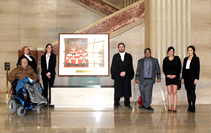
Some members of the CCD team at the Supreme Court of Canada on April 25, 2018 to intervene in S.A. v. Metro Vancouver Housing Corporation. (L. to R. Bob Brown, CCD Human Rights Committee member, Dianne Wintermute, legal counsel (ARCH), Dahlia James, a second year JD candidate at U. of Ottawa and Prof. Ravi Malhotra’s Research Assistant and Luke Reid, legal counsel (ARCH) , and Prof. Ravi Malhotra, a member of the Human Rights Committee, Prof. Anne Levesque, Chair of the Human Rights Committee, and Erin Carr, a second year JD candidate.
The Latimer Case
The Latimer case directly concerned the rights of persons with disabilities. Mr. Latimer's view was that a parent has the right to kill a child with a disability if that parent decides the child's quality of life no longer warrants its continuation. CCD explained to the court and to the public how that view threatens the lives of people with disabilities and is deeply offensive to fundamental constitutional values. Learn more.