We Need Your Support
Donations are tax deductible and you will receive a charitable tax receipt for 100% of your gift.

Act Now

Empower U: Learn to Access Your Disability Rights Training on Canadian Human Rights, the Convention on the Rights of Persons with Disabilities (CRPD) and its Optional Protocol (OP) training aims to increase awareness of how to address discrimination using more familiar Canadian human rights laws such as Human Rights Codes and the newer international Convention on the Rights of Persons with Disabilities (CRPD). This is training for persons with disabilities by persons with disabilities. The training is part of a project funded by Employment and Social Development Canada and implemented by the Council of Canadians with Disabilities (CCD) in collaboration with Canadian Multicultural Disability Centre Inc. (CMDCI), Citizens With Disabilities – Ontario (CWDO), Manitoba League of Persons with Disabilities (MLPD) and National Educational Association of Disabled Students (NEADS). Read more.
Canadians with Disabilities: We Are Not Dead Yet
June 18, 2010
Dear Member of Parliament:
People with disabilities are well aware that nondisabled people cannot imagine life with a disability. They tell us that they would rather be dead than living with a disability. This is because disability is equated with pain, suffering and dependency. At times, this attitude translates into a deadly compassion, where it is seen as a kindness to help a person with a disability to die. As a result, people with disabilities are being harmed. Since the 1990s, the Council of Canadians with Disabilities, a national human rights organization, has been working to address the insidious stereotypes that bring lethal harm to people with disabilities.
On 16 June 2010, two Canadians with disabilities, Rhonda Wiebe, Co-chair of CCD's Ending of Life Ethics Committee, and Jim Derksen, a Committee Member, appeared before the Ad Hoc Committee on Palliative and Compassionate Care to present CCD's brief "Canadians with Disabilities: We Are Not Dead Yet".
Ms. Wiebe and Mr. Derksen, in their appearance before the Committee explained, how deadly compassion puts us in harm's way. They urged those present at the hearing to avoid public policy options, such as legalized assisted suicide, which are driven by assumptions that equate disability with suffering.
I encourage you to review their brief which is available on CCD's web site in both official languages. There are many experts in the disability community who would be prepared to meet with you to discuss our concerns about legalized assisted suicide and other death hastening measures that affect people with disabilities at end of life.
Sincerely,
Laurie Beachell
National Coordinator
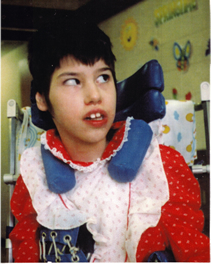
Tracy Latimer
The Latimer Case
The Latimer case directly concerned the rights of persons with disabilities. Mr. Latimer's view was that a parent has the right to kill a child with a disability if that parent decides the child's quality of life no longer warrants its continuation. CCD explained to the court and to the public how that view threatens the lives of people with disabilities and is deeply offensive to fundamental constitutional values. Learn more.