We Need Your Support
Donations are tax deductible and you will receive a charitable tax receipt for 100% of your gift.

Act Now

Empower U: Learn to Access Your Disability Rights Training on Canadian Human Rights, the Convention on the Rights of Persons with Disabilities (CRPD) and its Optional Protocol (OP) training aims to increase awareness of how to address discrimination using more familiar Canadian human rights laws such as Human Rights Codes and the newer international Convention on the Rights of Persons with Disabilities (CRPD). This is training for persons with disabilities by persons with disabilities. The training is part of a project funded by Employment and Social Development Canada and implemented by the Council of Canadians with Disabilities (CCD) in collaboration with Canadian Multicultural Disability Centre Inc. (CMDCI), Citizens With Disabilities – Ontario (CWDO), Manitoba League of Persons with Disabilities (MLPD) and National Educational Association of Disabled Students (NEADS). Read more.
Human Rights Archives
Human Rights
November 15, 2011
Factum in the D.A.I. Case
In the D.A. I. case, the Supreme Court of Canada was asked to consider whether people with intellectual disabilities should be allowed to testify in court. Specifically, the question before the Court is whether people with intellectual disabilities are required to demonstrate an understanding of the concept of a “promise to tell the truth” in order to be permitted to testify. CCD was been granted intervener status in this case. CCD argued that courts should not impose a test to allow people with disabilities to testify that is not imposed on others. Courts should focus scrutiny on the testimony given by individuals not the individuals themselves. Read more.
May 27, 2010
Factum in the Caron Case
Fighting a case in court is costly and CCD learned this lesson during its litigating against VIA Rail in support of accessible passenger trains. The Caron case focuses on the court's power to award interim costs while a case is in progress rather than waiting until its conclusion. An interim award provides a litigant with some of the resources it needs to present its case to the court.
CCD, working in coalition with other organizations (LEAF, Charter Committee on Poverty and the Poverty and Human Rights Centre), is intervening in the Caron case. Read more.
Litigation
June 23, 2022
Supreme Court of Canada Rules Charter Challenge to Forced Psychiatric Treatment Laws Can Continue
June 23, 2022, (Vancouver, BC) Today the Supreme Court of Canada rejected the BC government’s five-year legal campaign aimed at stopping the Council of Canadians with Disabilities (CCD) – a nationally respected disability rights organization – from challenging BC’s outdated and unconstitutional forced psychiatric treatment laws. The court not only rejected the government’s appeal, but also confirmed that CCD has the legal right to bring the case forward. In an extraordinary move, the Court also ordered that the government pay for all legal costs associated with this unnecessary delay.“The Supreme Court unanimously and decisively resolved the standing question in CCD’s favour,” says Michael Feder, a lawyer with the law firm McCarthy Tétrault who argued the case on behalf of CCD. “This ruling has broad importance for access to justice and for ensuring discriminatory and other unconstitutional laws can be challenged in court.” Read more.
November 24, 2021
Immediate and Meaningful Action Required to Address Systemic Discrimination of Adults Who Have a Disability in Nova Scotia
The Beth MacLean decision has sent a powerful message across Canada about Nova Scotia’s systemic discrimination against people with disabilities. Following this landmark decision, the National Organizations are writing this letter in support of the Disability Rights Coalition’s call for immediate action to end the human rights emergency in Nova Scotia. Read more.
October 6, 2021
SIGNIFICANT VICTORY FOR NOVA SCOTIANS WITH INTELLECTUAL DISABILITIES
Nova Scotia lags well behind other Canadian provinces in providing community homes and supports for people with intellectual disabilities. Today’s ruling presents an opportunity to the new provincial government in Nova Scotia to acknowledge (1) that they have fundamentally wronged persons with disabilities for decades, (2) that systemic barriers to community inclusion for persons with disabilities are no longer tolerable in a free and democratic society, (3) that they stop fighting persons with disabilities in courts, and (4) that they will work with the community to address their human rights emergency. Read more.
January 25, 2019
COUNCIL OF CANADIANS WITH DISABILITIES APPLAUDS DECISION OF THE SUPREME COURT OF CANADA
The CCD is pleased by the Supreme Court's decision in S.A. v MVHC. Read more.
November 29, 2018
Update on the Charter Challenge to BC's Mental Health Act
In August 2018, the BC government brought an application to have the case dismissed, arguing that CCD did not have the legal status (“standing”) to defend the rights of people with mental disabilities in court. In October 2018, the BC Supreme Court decided that CCD did not have standing and dismissed the case before it got to trial. CCD has appealed the Court’s decision. Read more.
April 24, 2018
S.A. v. Metro Vancouver Housing Corporation
On April 25, 2018, the Council of Canadians with Disabilities (CCD) is intervening in a very important case before the Supreme Court of Canada. This case could have a significant impact on persons with disabilities, affecting their autonomy, independence and inclusion. The case is called S.A. v. Metro Vancouver Housing Corporation. It raises the question: can absolute discretionary trusts, also known as Henson Trusts, be taken into account in eligibility criteria for social programs, like a housing subsidy or social assistance? Read more.
Promoting Human Rights
March 31, 2026
Landmark Human Rights Tribunal Decision Advances Rights and Accessibility for Deaf and Hard of Hearing People in Federal Prisons
A landmark decision by the Canadian Human Rights Tribunal in Timothy Lidkea v. Correctional Service Canada (2026 CHRT 19) marks a major advancement in the recognition and protection of the rights of Deaf and hard of hearing individuals within Canada’s federal prison system. Read more.
March 31, 2026
Council of Canadians with Disabilities (CCD) and the Canadian Association of the Deaf (CAD) Help Secure Another Major Win for Deaf People
In June 2024, CCD and CAD jointly applied to the Canadian Human Rights Tribunal for interested party status in the case of Lidkea v. Correctional Service of Canada (CSC). The Tribunal granted this request, allowing CCD and CAD to make submissions on the treatment of Deaf inmates within the federal prison system. Our primary focus was on CSC’s duty to provide accommodation to Deaf inmates to remove barriers and ensure that they have the same access to activities, programs and services available to other inmates. Read more.
March 31, 2026
A Canada where trans people can live authentically
Today, on International Trans Day of Visibility, the Canadian Human Rights Commission reaffirms its commitment to every trans, Two-Spirit, non-binary, and gender-diverse person in Canada. Read more.
April 17, 2024
Council of Canadians with Disabilities : 48 years strong and "On The Road to 50 Years"
In this Chapter I recount how COPOH, through skilled leadership and a fierce determination to change the course of history, persuaded Canada to become one of the first countries to accord persons with disabilities Constitutional protection of their equality rights. I begin the Chapter with a brief background on the evolution of a disability rights analysis and its impact on the development of the disability rights movement as a political actor. I then discuss the patriation of Canada's Constitution and how it affected Canadians with disabilities. Finally, I describe some of the strategies used by people with disabilities to illustrate their passion and will to achieve recognition in the Canadian Charter of Rights and Freedoms. ~ Yvonne Peters Read more.
March 21, 2024
Everyone has a responsibility to end racism
Today is the International Day for the Elimination of Racial Discrimination. Read more.
December 10, 2023
International Day of Human Rights
Today, December 10th, 2023, CCD commemorates International Human Rights Day. The theme for this year is Freedom, Equality and Justice for All. Read more.
Promoting Human Rights Archives
Ending of Life Ethics
March 18, 2026
Inclusion Canada welcomes Alberta Bill 18 and calls for national reform of assisted dying laws
The proposed legislation would refuse to deliver Medical Assistance in Dying (MAiD) in cases where a person’s natural death is not reasonably foreseeable, limiting the provision of assisted death in Alberta to end-of-life circumstances. The bill also includes measures allowing the province to decline to implement MAiD for individuals whose sole underlying condition is mental illness and for mature minors. Read more.
February 26, 2024
C-62: CCD, ARCH, Inclusion Canada, DAWN Canada Urged Changes to MAiD Bill - February 23, 2024
View media conference. Read more.
November 25, 2021
An Open Letter from the Council of Canadians with Disabilities (CCD) Concerning the Canadian Psychiatric Association Position Statement on Medical Aid in Dying (MAiD)
The Council of Canadians with Disabilities (CCD), a national human rights organization of people with disabilities working for an equitable, accessible and inclusive Canada, is very concerned about the approach taken on Medical Aid in Dying by the Canadian Psychiatric Association (CPA) in its Position Statement. CCD joins others in calling upon the CPA to reform its Position Statement on MAiD. Read more.
March 15, 2021
CCD Disappointed by House of Commons Yes Vote on Bill C-7 (Medical Aid in Dying)
The MAID regime that will be authorized by the Bill will put vulnerable people with disabilities in harm’s way by making it easier to access medical aid in dying. While many people with disabilities cannot access the disability-related supports that they need to live dignified lives in the community, they will be able to get Medical Aid in Dying. The Bill creates a separate track, whereby people with disabilities can access MAID, even if they are not at end of life. Even people experiencing a mental health crisis will have access to MAID. “We are extremely concerned that people with disabilities experiencing a temporary crisis will accept MAID and die needlessly,” states Smith. Read more.
January 29, 2021
UN Human Rights Experts' Statement Condemning Medically-Assisted Death for People with Disabilities Not at End-of-Life Means that Canada is No Longer an International Leader in Human Rights
The Council of Canadians with Disabilities (CCD), a national disability rights organization, is highlighting a recent statement by United Nations human rights experts condemning the growing trend towards legalizing Medically Assisted Death for people with disabilities who are not at end-of-life as “definitive evidence” that Bill C-7, the Liberal government’s proposed expansion of Canada’s MAiD law, is a direct violation of Canada’s commitments as a signatory to the UN Convention on the Rights of Persons with Disabilities (CRPD). Read more.
November 7, 2020
Disability-Rights Organizations' Public Statement on the Urgent Need to Rethink Bill C-7, The Proposed Amendment to Canada's Medical Aid in Dying Legislation
The Canadian disability-rights community remains united in denouncing Bill C-7 as an assault on the Equality Rights of people with disabilities. The flaws—and, indeed, the overt pro-MAID bias— which characterized the “consultation” process leading up to the tabling of Bill C-7 are well documented. In short, everything from the online questionnaire to the in-person consultations were geared toward a pre-determined outcome, namely, the expansion of Medical Assistance in Dying as a legally- and socially-sanctioned substitute for assistance in living that we see in Bill C-7. Read more.
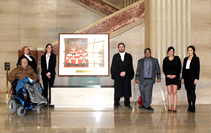
Some members of the CCD team at the Supreme Court of Canada on April 25, 2018 to intervene in S.A. v. Metro Vancouver Housing Corporation. (L. to R. Bob Brown, CCD Human Rights Committee member, Dianne Wintermute, legal counsel (ARCH), Dahlia James, a second year JD candidate at U. of Ottawa and Prof. Ravi Malhotra’s Research Assistant and Luke Reid, legal counsel (ARCH) , and Prof. Ravi Malhotra, a member of the Human Rights Committee, Prof. Anne Levesque, Chair of the Human Rights Committee, and Erin Carr, a second year JD candidate.
The Latimer Case
The Latimer case directly concerned the rights of persons with disabilities. Mr. Latimer's view was that a parent has the right to kill a child with a disability if that parent decides the child's quality of life no longer warrants its continuation. CCD explained to the court and to the public how that view threatens the lives of people with disabilities and is deeply offensive to fundamental constitutional values. Learn more.