We Need Your Support
Donations are tax deductible and you will receive a charitable tax receipt for 100% of your gift.

Act Now

Empower U: Learn to Access Your Disability Rights Training on Canadian Human Rights, the Convention on the Rights of Persons with Disabilities (CRPD) and its Optional Protocol (OP) training aims to increase awareness of how to address discrimination using more familiar Canadian human rights laws such as Human Rights Codes and the newer international Convention on the Rights of Persons with Disabilities (CRPD). This is training for persons with disabilities by persons with disabilities. The training is part of a project funded by Employment and Social Development Canada and implemented by the Council of Canadians with Disabilities (CCD) in collaboration with Canadian Multicultural Disability Centre Inc. (CMDCI), Citizens With Disabilities – Ontario (CWDO), Manitoba League of Persons with Disabilities (MLPD) and National Educational Association of Disabled Students (NEADS). Read more.
Carter v. Canada (Attorney General), 2012 BCSC 886
27 June 2012
Hon. Robert Nicholson, PC, QC, MP
Attorney General of Canada
House of Commons
Ottawa, ON
K1A OA6
mcu@justice. gc.ca
Dear Minister Nicholson:
The Council of Canadians with Disabilities (CCD), which works for access and inclusion, urges Canada to appeal Carter v. Canada (Attorney General), 2012 BCSC 886, which legalizes assisted suicide in Canada and will make doctors complicit in death-making. Legislators have the responsibility to establish reasonable limits and the Criminal Code’s prohibitions against assisted suicide are reasonable as they protect vulnerable people, the Canadian medical system, and Canadian society from irreparable harm.
Legalized physician assisted suicide violates the Canadian value that shuns killing, except in self-defence. The BC decision creates a new category of Canadians: people deserving to be killed; people with disabilities will be the ones perceived as populating this category. Sue Rodriguez and Gloria Taylor, two women with disabilities, have been the rallying figures in Canada’s court cases to legalize assisted suicide. We with disabilities will be the ones to bear the lethal brunt of the stigmatization that will come with legalized assisted suicide.
We with disabilities hear from Canadians who tell us they would never want to live as we do, preferring death to life with a disability. They wrongly assume life with a disability is synonymous with suffering and pain. Legalized assisted suicide will confirm this notion for many. We fear legalized assisted suicide functioning in tandem with stereotypical misconceptions about the poor quality of life with a disability will result in people with disabilities being subtly coerced to accept undesired assisted suicides. Our concern is grounded in the experiences of our hospitalized friends who have been pressured to accept Do Not Resuscitate Orders and palliation rather than aggressive treatment. Even one unwanted assisted suicide is too many; thus we urge the immediate appeal of the BC Supreme Court decision.
Prohibition, not safeguards, is the correct answer to the assisted suicide question. Attached is CCD’s research on safeguards to prevent abuse of assisted suicide, which analyzes whether provisions could be sufficiently robust to protect people with disabilities.
I, along with others in CCD, would be pleased to meet with you to elaborate upon our concerns.
Sincerely,
Tony Dolan
Chairperson
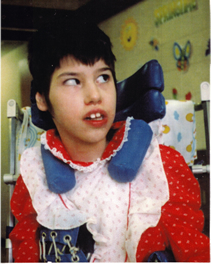
Tracy Latimer
The Latimer Case
The Latimer case directly concerned the rights of persons with disabilities. Mr. Latimer's view was that a parent has the right to kill a child with a disability if that parent decides the child's quality of life no longer warrants its continuation. CCD explained to the court and to the public how that view threatens the lives of people with disabilities and is deeply offensive to fundamental constitutional values. Learn more.