We Need Your Support
Donations are tax deductible and you will receive a charitable tax receipt for 100% of your gift.

Act Now

Empower U: Learn to Access Your Disability Rights Training on Canadian Human Rights, the Convention on the Rights of Persons with Disabilities (CRPD) and its Optional Protocol (OP) training aims to increase awareness of how to address discrimination using more familiar Canadian human rights laws such as Human Rights Codes and the newer international Convention on the Rights of Persons with Disabilities (CRPD). This is training for persons with disabilities by persons with disabilities. The training is part of a project funded by Employment and Social Development Canada and implemented by the Council of Canadians with Disabilities (CCD) in collaboration with Canadian Multicultural Disability Centre Inc. (CMDCI), Citizens With Disabilities – Ontario (CWDO), Manitoba League of Persons with Disabilities (MLPD) and National Educational Association of Disabled Students (NEADS). Read more.
Ending of Life Ethics Archives
Ending of Life Ethics
March 18, 2026
Inclusion Canada welcomes Alberta Bill 18 and calls for national reform of assisted dying laws
The proposed legislation would refuse to deliver Medical Assistance in Dying (MAiD) in cases where a person’s natural death is not reasonably foreseeable, limiting the provision of assisted death in Alberta to end-of-life circumstances. The bill also includes measures allowing the province to decline to implement MAiD for individuals whose sole underlying condition is mental illness and for mature minors. Read more.
November 7, 2020
Disability-Rights Organizations' Public Statement on the Urgent Need to Rethink Bill C-7, The Proposed Amendment to Canada's Medical Aid in Dying Legislation
The Canadian disability-rights community remains united in denouncing Bill C-7 as an assault on the Equality Rights of people with disabilities. The flaws—and, indeed, the overt pro-MAID bias— which characterized the “consultation” process leading up to the tabling of Bill C-7 are well documented. In short, everything from the online questionnaire to the in-person consultations were geared toward a pre-determined outcome, namely, the expansion of Medical Assistance in Dying as a legally- and socially-sanctioned substitute for assistance in living that we see in Bill C-7. Read more.
July 12, 2018
TRACY LATIMER MUST NOT BE ERASED; HER MURDER MUST NOT BE PARDONED
Multiple news outlets are reporting that Robert Latimer has submitted a letter to the Minister of Justice seeking a pardon or a new trial following his conviction for the murder of his daughter Tracy in 1993.
Latimer has been free on parole since 2010. Contrary to some media reports, Latimer has been able to travel outside Canada since 2015, according to the Globe and Mail.
Disability rights activists are concerned that the pardon request is a “symptom and effect of the continuing devaluation of disabled people” as shown by the legalization of assisted suicide and euthanasia in 2016, according to Amy Hasbrouck, director of Toujours Vivant-Not Dead Yet. She notes that individual choice is supposed to be key to the suspension of homicide laws in cases of assisted suicide and euthanasia. “Yet Tracy was not given a choice.”
Dr. Heid Janz, Chair of CCD’s Ending-of-Life Ethics Committee, expresses profound dismay at the mainstream media’s continuing practice of disseminating entirely erroneous descriptions of Tracy Latimer’s condition. “Some reports on Latimer’s petition revived the decades’ old false description of Tracy Latimer as a bed-ridden quadriplegic,” Janz said. “But the fact, documented in all of Latimer’s trials, is that Tracy rode the school bus to her school program right up until the weekend that her father murdered her.”
July 28, 2017
CCD Alarmed by Blatant Disregard of MAID Legislation
Sheila Elson was offered Medical Aid in Dying (MAID) for her daughter who lives with spina bifida and cerebral palsy. Read more.
January 25, 2017
Media Advisory: CCD Available to Comment on "Mary Kills People"
On January 26, 2016, CCD representatives will be available to talk to the media about how "Mary Kills People" portrays people with disabilities and euthanasia and whether the program violates the CRTC’s Equitable Portrayal Code. Read more.
June 15, 2016
Media Advisory - National Forum for Robust Safeguards in Bill C -14 - Ottawa: Thursday June 16
On Thursday June 16th, join a Community Forum for Robust Safeguards in Bill C-14 hosted by the National Disability Rights Community. We will let Parliamentarians know what is at stake for disabled Canadians and their families. This event continues a national conversation, launched by the National Disability Rights Community. We are Canadians with disabilities, their families and supporters working to ensure that Bill C-14 protects vulnerable Canadians. Read more.
June 15, 2016
Share Your Voice: Community Forum for Robust Safeguards in Bill C-14 Thursday, June 16th
On Thursday June 16th, join a Community Forum for Robust Safeguards in Bill C-14 hosted by the National Disability Rights Community. We will let Parliamentarians know what is at stake for disabled Canadians and their families. Read more.
February 25, 2016
Recommendations Contained in Report of Joint Committee on Physician - Assisted Dying Pose Significant Risk to Vulnerable Canadians
CCD and CACL will be urging the government to adopt a stronger system of safeguards, and to adopt a clear standard for protecting vulnerable persons. Canadians requesting assistance from physicians to end their life should be able to do so without jeopardizing the lives of vulnerable persons who may be subject to coercion, inducement and abuse. Read more.
January 29, 2016
CCD Submission to Special Joint Committee on Physician Assisted Dying
The Supreme Court of Canada in Carter emphasized that there needs to be a balanced system that both enables access by patients to physician-assisted suicide and voluntary euthanasia (PAD/VE), and protects persons who are vulnerable and may be induced to commit suicide. The Council of Canadians with Disabilities (CCD) strongly believes that a minimal but mandatory vulnerability assessments, an independent review process with prior authorization, along with Criminal Code protection of the vulnerable are essential for this purpose. Read more.
January 12, 2016
VULNERABLE PERSONS AT RISK OF ABUSE IN SYSTEM FOR PHYSICIAN-ASSISTED SUICIDE, WITHOUT MORE TIME TO DEVELOP SAFEGUARDS
The Council of Canadians with Disabilities (CCD) and the Canadian Association for Community Living (CACL) and their legal counsel attended the Court's hearings on Monday in support of the federal government's request to extend the February 6 deadline for having a system in place. Read more.
July 21, 2015
Views of Disability Community on Assisted Suicide to Get Hearing
CCD and CACL are pleased that the Government of Canada will be soliciting the views of interveners in the Carter case and respect the decision to appoint a panel of experts in law and ethics to consider options. We will bring forward to the panel proposed principles and guidelines for a safeguarding system and hope that our views and concerns will be given a fair hearing in this most important of policy decisions. Read more.
February 6, 2015
Assisted Suicide Decision Changes Landscape, Makes Disability a Defining Issue
Today’s decision of the Supreme Court fundamentally alters end-of-life for all Canadians. The Council of Canadians with Disabilities (CCD) and the Canadian Association for Community Living (CACL) are profoundly disappointed by today’s ruling and extremely concerned about the implications of the ruling. Read more.
February 4, 2015
What's At Stake in Friday's Supreme Court Decision on Assisted Suicide
Whatever the outcome of Friday’s ruling, we urge all Canadians and our legislators to listen to the voices of those who have historically been disadvantaged and marginalized and ensure they can participate in the coming public debates and political decisions. Read more.
September 9, 2014
Canadians Should not be Provided Public Support to Kill Themselves
CCD/CACL want the public to understand the concerns of the community AS/E is said to benefit. To learn more you can access the CCD/CACL factum submitted to the Supreme Court, at www.ccdonline.ca or www.cacl.ca or contact: Read more.
September 5, 2014
Factum in the Carter Case - August 2014
CCD/CACL want the public to understand the concerns of the community assisted suicide/euthanasia is said to benefit. To learn more you can access the CCD/CACL factum submitted to the Supreme Court. Read more.
January 16, 2014
Canadians with Disabilities Feel Threatened by SCC Decision to Allow Appeal on Assisted Suicide
The Council of Canadians with Disabilities (CCD) had hoped the appeal would be denied. "Circumstances in Canada have not changed so much in the intervening years since the Rodriguez decision to require this issue to be revisited by the SCC," states Dolan. ”If anything, the justification is weaker because of improvements in palliative care”. Read more.
January 2, 2014
Affidavit of Michael Bach in Carter Case
CCD and CACL filed affidavits concerning the Carter case with the Supreme Court of Canada. Read more.
January 2, 2014
Affidavit of Laurie Beachell in Carter Case
CCD and CACL filed affidavits concerning the Carter case with the Supreme Court of Canada. Read more.
January 2, 2014
Reply to Appellants' Opposition to Intervention in the Carter Leave Application
CCD's submission to the Supreme Court in regard to the Appellants opposition to our intervention in the Carter leave application.
This material will be filed with the Court this morning. Read more.
October 10, 2013
Canadians with Disabilities Celebrate Ruling Against Assisted Suicide
The British Columbia Court of Appeal ruling in Carter v. Canada opposing assisted suicide is being celebrated by Canadians with disabilities. The Council of Canadians with Disabilities (CCD) and the Canadian Association for Community Living (CACL), two of Canada’s largest organizations representing persons with disabilities and their families are pleased and relieved with the decision. Read more.
October 9, 2013
Media Advisory: Comment on appeal of Carter v. Canada (assisted suicide)
On Thursday October 10th the British Columbia Court of Appeal will hand down its ruling in Carter v. Canada (assisted suicide). The Council of Canadians with Disabilities (CCD) and the Canadian Association for Community Living (CACL), two of Canada’s largest organizations representing persons with disabilities and their families, intervened in this case to oppose any change in the Criminal Code of Canada that would allow assisted suicide. CCD and CACL spokespersons will be available to comment on the Carter Appeal decision this Thursday.
Read more.
March 18, 2013
CCD AND CACL TO TESTIFY AT CARTER APPEAL (Assisted Suicide) HEARING
CCD and CACL, who represent persons with disabilities throughout Canada, will argue that the ban should remain in place, because assisted suicide reinforces disability discrimination and puts vulnerable persons at risk. Read more.
March 15, 2013
Assisted Suicide Case and Canadians with Disabilities Opposition
CCD and CACL oppose any change in the Criminal Code that would allow assisted suicide. Vulnerable persons, people with disabilities and the elderly will be put at risk if the law is changed. Read more.
March 1, 2013
Assisted Suicide Case and Canadians with Disabilities Opposition
CCD and CACL oppose any change in the Criminal Code that would allow assisted suicide. Read more.
January 11, 2013
Factum in the Carter Case
The Council of Canadians with Disabilities (CCD) and the Canadian Association for Community Living (CACL) were granted intervenor status in the appeal of the Carter Case, which struck down Canada’s Criminal Code prohibitions against assisted suicide. CCD/CACL argued in their factum Criminal Code prohibitions on assisting suicide and on euthanasia are justified and in accord with the principles of fundamental justice. CCD and CACL requested an order that the appeal be allowed and the trial judgement set aside. Following directions from the Court, CCD and CACL restricted their factum to arguments based upon Section 7 (Security of the Person) of the Charter of Rights and Freedoms. Another intervenor, the Euthanasia Prevention Coalition was directed by the Court to focus on Section 15 (Equality Rights) arguments. Read more.
November 4, 2012
Frequently Asked Questions About Assisted Suicide
Rhonda Wiebe responds to some frequently asked questions about assisted suicide. Read more.
November 4, 2012
Rhonda Wiebe Debates Assisted Suicide
The Conference Board of Canada held a Summit on Sustainable Health and Health Care in Toronto, Ontario. On 20 October 2012, as part of the program, the Conference Board organized a debate of the motion that end-of-life decisions belong to the individual. The Conference Board of Canada invited Rhonda Wiebe, the Co-chair of CCD’s Ending of Life Ethics Committee to argue against the motion. The other participants were: Moderator: Ralph Benmergui, Senior Advisor to the President, Sheridan College; Arguing for the motion: Wanda Morris, Executive Director, Dying with Dignity Canada; Daniel Weinstock, Professor, Faculty of Law, McGill University. Arguing against the motion: Bernard J. Lapointe, Eric M. Flanders Chair in Palliative Care, McGill University. Rhonda shared her speaking notes with CCD and these are shared below. Read more.
July 23, 2012
CCD Ending of Life Ethics Committee Co-chair Rebuts Arthur Schafer
Arthur Schafer’s portrayal of comments on the merits of physician-assisted suicide need challenging. Schafer, like many other supporters of physician-assisted suicide (also known as “doctor prescribed death”) does not seem to have considered the wider issues facing Canadians with disabilities, including the ongoing social prejudice and discouraging lack of living supports that we encounter on a daily basis. Read more.
July 13, 2012
How about the right to cry for help?
In this article, Amy E. Hasbrouck comments, "The B.C. Supreme Court has chosen not to listen very closely to disability-rights advocates with more than 20 years of experience battling discrimination; instead, the court relied on the stories of people who have accepted the view that disability is undignified, and that people with disabilities should be given a streamlined path to death whenever they want it and however they want it." Read more.
June 29, 2012
Carter v. Canada (Attorney General), 2012 BCSC 886
Prohibition, not safeguards, is the correct answer to the assisted suicide question. Read more.
June 15, 2012
Canadians with Disabilities Dismayed by BC Court Approval of Assisted Suicide
Today, the Supreme Court of British Columbia handed down its decision in the Carter case, opening the door for assisted suicide in Canada. Canadians with disabilities are disappointed by the Judge’s decision. There is a concern that vulnerable people will be put at risk if the Criminal Code provisions against assisted suicide are struck down. The Council of Canadians with Disabilities (CCD) urges the Government of Canada to appeal this decision. Canadians who are concerned with this decision should write the Minister of Justice and encourage an appeal of this decision to the Supreme Court. Read more.
March 30, 2012
Global's "Taking Mercy" Portrays People with Disabilities as Suffering and Subhuman; CCD Seeks Redress
The Council of Canadians with Disabilities (CCD), a national human rights organization of people with disabilities, challenges Global, to offset the harm it has done to people with disabilities, by running a follow-up to its “Taking Mercy” media blog. CCD will also be launching a formal complaint about Global’s coverage. Read more.
March 26, 2012
CCD's Response to "Taking Mercy" (Global 16x9; March 16, 2012)
We are challenging Global, in the name of journalistic balance, to stage a follow-up episode featuring persons with disabilities who want to live and who see a danger in opening up the debate on euthanasia. Only good can come from providing an opportunity for a broader, fairer public discourse.
June 9, 2011
Video: Who Chooses? End of Life Decision-making and People with Disabilities
Manitobans with disabilities discuss their concerns about how end of life decision making occurs in their province. Read more.
June 16, 2010
Deadly Compassion
People with disabilities are not strangers to the fact that nondisabled people cannot imagine life with a disability. They tell us that they would rather be dead than living with a disability. This is because disability is equated with pain, suffering, and dependency. At times, this attitude translates into a deadly compassion, where it is seen as a kindness to help a person with a disability to die. As a result, people with disabilities are being harmed. Today, two Canadians with disabilities, Rhonda Wiebe and Jim Derksen, appear before the House of Commons Committee on Palliative and Compassionate Care to explain how deadly compassion puts us in harms way and to suggest how to detoxify the medical care and public policy environment, as both are affected by this insidious stereotype. Read more.
July 24, 2009
Council of Canadians with Disabilities (CCD) Opposes Bill C-384
The COUNCIL OF CANADIANS WITH DISABILITIES (CCD) believes that everyone who supports disability rights should oppose Bill C-384 which would legalize euthanasia and assisted suicide and put Canadians with disabilities at risk! Read more.
Latimer
October 24, 2018
CCD to Launch Tracy Latimer Archives and Facebook Page
On the 25th anniversary of the tragic murder of Tracy Latimer, a young Canadian girl with Cerebral Palsy, the Council of Canadians with Disabilities (CCD) announces it will be establishing the virtual Tracy Latimer archive and Facebook page. Read more.
June 4, 2008
Tracy Latimer, the Victim; Robert Latimer, the Murderer
CCD explains why people with disabilities are concerned about Latimer's release from prison and his stated intentions to clear his name. The disability community is concerned about Latimer's potential to act as a catalyst, mobilizing pro-Latimer public sentiment that has been dormant since the Supreme Court sent him to prison back in 2001. Any climate of permissiveness is frightening for persons with disabilities because they worry it would leave them at the mercy of caregivers who think they know best. Read more.
February 16, 2007
An Open Letter to Prime Minister Harper
October 18, 2002
Action Alert Re: United Church Observer
December 28, 2001
We all LIVE under the same SKY! WE all LIVE under the same LAW!
April 13, 2001
The Bell in Hadamar
March 26, 2001
The Toll Mounts: Another Child Killed
February 2, 2001
Responding to Concerns
January 18, 2001
Supreme Court Decides Against Robert Latimer
November 10, 2000
Provincial Museum of Alberta Promotes Murder of Disabled Children Says ACL Web Site
June 13, 2000
Used Foot Wear
Euthanasia/Assisted Suicide
February 26, 2024
C-62: CCD, ARCH, Inclusion Canada, DAWN Canada Urged Changes to MAiD Bill - February 23, 2024
View media conference. Read more.
November 25, 2021
An Open Letter from the Council of Canadians with Disabilities (CCD) Concerning the Canadian Psychiatric Association Position Statement on Medical Aid in Dying (MAiD)
The Council of Canadians with Disabilities (CCD), a national human rights organization of people with disabilities working for an equitable, accessible and inclusive Canada, is very concerned about the approach taken on Medical Aid in Dying by the Canadian Psychiatric Association (CPA) in its Position Statement. CCD joins others in calling upon the CPA to reform its Position Statement on MAiD. Read more.
March 15, 2021
CCD Disappointed by House of Commons Yes Vote on Bill C-7 (Medical Aid in Dying)
The MAID regime that will be authorized by the Bill will put vulnerable people with disabilities in harm’s way by making it easier to access medical aid in dying. While many people with disabilities cannot access the disability-related supports that they need to live dignified lives in the community, they will be able to get Medical Aid in Dying. The Bill creates a separate track, whereby people with disabilities can access MAID, even if they are not at end of life. Even people experiencing a mental health crisis will have access to MAID. “We are extremely concerned that people with disabilities experiencing a temporary crisis will accept MAID and die needlessly,” states Smith. Read more.
January 29, 2021
UN Human Rights Experts' Statement Condemning Medically-Assisted Death for People with Disabilities Not at End-of-Life Means that Canada is No Longer an International Leader in Human Rights
The Council of Canadians with Disabilities (CCD), a national disability rights organization, is highlighting a recent statement by United Nations human rights experts condemning the growing trend towards legalizing Medically Assisted Death for people with disabilities who are not at end-of-life as “definitive evidence” that Bill C-7, the Liberal government’s proposed expansion of Canada’s MAiD law, is a direct violation of Canada’s commitments as a signatory to the UN Convention on the Rights of Persons with Disabilities (CRPD). Read more.
November 7, 2020
COUNCIL OF CANADIANS WITH DISABILITIES DENOUNCES TRUDEAU GOVERNMENT'S RE-INTRODUCTION OF UNAMMENDED BILL C-7 ON MEDICAL AID IN DYING AS "HEAD-IN-THE SAND MENTALITY" THAT ENDANGERS THE LIVES OF CANADIANS WITH DISABILITIES
The Council of Canadians with Disabilities (CCD), a national disability rights organization, is vehemently denouncing the Trudeau government’s re-introduction of Bill C-7, a bill which extends access to Medical Aid in Dying to people who are experiencing intolerable suffering as a result of illness or disability, but whose death is not reasonably foreseeable. The bill was first introduced in early February, before the COVID-19 pandemic hit Canada. Read more.
November 7, 2020
The Council of Canadians with Disabilities Supports Quebecer, Jonathan Marchand, as he brings his cage in front of the National Assembly in Quebec to obtain his and his friends' release from long-term care facilities
The Council of Canadians with Disabilities (CCD), a national disability rights organization, is expressing its support for 43-year-old Jonathan Marchand as he begins a protest to obtain his and his friends’ release from long-term care facilities in Quebec. Read more.
September 4, 2018
CANADA'S MEDICAL ASSISTANCE IN DYING REGULATIONS FALL SHORT
The Canadian Association for Community Living (CACL) and the Council of Canadians with Disabilities (CCD) strongly call on the federal government to strengthen the monitoring system for medical assistance in dying (MAiD). Read more.
April 15, 2016
Bill C-14 Does Not Go Far Enough to Protect Vulnerable Canadians
“In the Carter decision, the Supreme Court of Canada gave the Government of Canada two assignments (1) develop a regime to provide dying people access to assisted suicide and (2) protect vulnerable Canadians who at a time of weakness may be influenced to accept medical aid in dying. Unfortunately, C-14 has some serious gaps when it comes to protecting the vulnerable,” states Rhonda Wiebe, a Co-Chair of CCD’s Ending of Life Ethics Committee. “Canada must do enough to protect people like me and other Canadians with disabilities who can be made vulnerable by both our health conditions and our social and economic circumstances”. Read more.
March 29, 2016
Vulnerable Persons Standard
Read more for a sample letter that individuals can send to their MPs supporting the Vulnerable Persons Standard and asking that its terms be incorporated in the law regulating assisted suicide/euthanasia. Read more.
January 28, 2016
"Right to Palliative Care, Vulnerability Assessment & Review Board Key Pillars of PAD/VE Regime" Says Council of Canadians with Disabilities (CCD)
Today, the Special Joint Committee on Physician Assisted Dying hears from Rhonda Wiebe and Dean Richert, who co-chair CCD's Ending of Life Ethics Committee. Read more.
January 15, 2016
SCC Decision Disappoints
The Council of Canadians with Disabilities (CCD) was disappointed by today's Supreme Court of Canada (SCC) decision in the Carter case, because the SCC granted a four, as opposed to the requested six, month extension for Parliament to develop a system for physician-assisted suicide and the SCC granted an exemption from the extension to Quebec, where an assisted suicide law came into force on December 10, 2015. Read more.
October 14, 2014
"Canadians Should not be Provided Public Support to Kill Themselves"
The Supreme Court of Canada will hear the appeal in the Carter case October 15th in which it is being asked to strike down these protections, but only for disabled people. The Council of Canadians with Disabilities (CCD) and the Canadian Association for Community Living (CACL) are the organized voice of Canada’s disabled citizens. They will appear in court to oppose efforts to legalize assisted suicide and euthanasia. Read more.
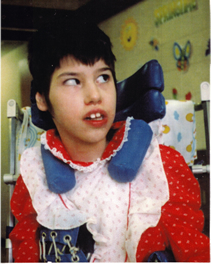
Tracy Latimer
The Latimer Case
The Latimer case directly concerned the rights of persons with disabilities. Mr. Latimer's view was that a parent has the right to kill a child with a disability if that parent decides the child's quality of life no longer warrants its continuation. CCD explained to the court and to the public how that view threatens the lives of people with disabilities and is deeply offensive to fundamental constitutional values. Learn more.