We Need Your Support
Donations are tax deductible and you will receive a charitable tax receipt for 100% of your gift.

Act Now

Empower U: Learn to Access Your Disability Rights Training on Canadian Human Rights, the Convention on the Rights of Persons with Disabilities (CRPD) and its Optional Protocol (OP) training aims to increase awareness of how to address discrimination using more familiar Canadian human rights laws such as Human Rights Codes and the newer international Convention on the Rights of Persons with Disabilities (CRPD). This is training for persons with disabilities by persons with disabilities. The training is part of a project funded by Employment and Social Development Canada and implemented by the Council of Canadians with Disabilities (CCD) in collaboration with Canadian Multicultural Disability Centre Inc. (CMDCI), Citizens With Disabilities – Ontario (CWDO), Manitoba League of Persons with Disabilities (MLPD) and National Educational Association of Disabled Students (NEADS). Read more.
Global's "Taking Mercy" Portrays People with Disabilities as Suffering and Subhuman; CCD Seeks Redress
30 March 2012
For Immediate Release
The Council of Canadians with Disabilities (CCD), a national human rights organization of people with disabilities, challenges Global, to offset the harm it has done to people with disabilities, by running a follow-up to its “Taking Mercy” media blog. The follow-up would counter the negative portrayal of people with disabilities presented in “Taking Mercy”, by featuring persons with disabilities who want to live and who see a danger in opening up the debate on euthanasia. “Only good can come from providing an opportunity for a broader, fairer public discourse,” states Rhonda Wiebe, Co-chair CCD Ending of Life Committee. CCD will also be launching a formal complaint about Global’s coverage.
Global’s media blog “Taking Mercy” (March 16, 2012) left many Canadians in a state of shock. The entire program was filled with misinformation, fear, and stigma. “Those of us who live with disabilities could easily have shared hospital rooms, support services, classrooms or neighborhoods with Tracy Latimer and other children like her who have been murdered by their parents. When we hear ourselves categorized as suffering and having lives that are only worthy of death, we are reminded how segments of our society – represented by the panelists on the Global blog – don’t think we belong,“ states Wiebe. “Global’s guests, including “parent” Robert Latimer and “ethicist” Arthur Schafer only feed into the existential nightmare many Canadians with disabilities face because they perpetuate the idea that it is better to be dead than disabled. Some of us may not be able to speak or walk or hear or see, but that doesn’t mean we don’t belong. Even if we experience pain or need help going to the bathroom, we are still Canadians, we are protected under the Charter of Rights and Freedoms, and no one has the right to kill us,” continues Wiebe.
Global’s blog refused to acknowledge that people with disabilities are so much more than the sum of our disabilities. Murdering us is not a compassionate or reasonable choice. Some of us with disabilities, who are now adults, vividly recollect the nightmare we had as children when another child like us, Tracy Latimer, was killed by her father. That nightmare was only intensified when we watched so many Canadians express sympathy for the killer rather than the victim.
CCD does not understand how Global could frame the justification for murdering persons with disabilities using a term like “mercy.” The existence of people with disabilities should not be dependent on someone else’s subjective measurement of worthiness. When you reduce the powerful and purposeful lives of persons with disabilities by using trite comments likening our existence to that of pets, plants, mere burdens or simplified stereotypes, you portray us as subhuman and suffering.
CCD asks where were the voices of citizens living with significant disabilities? Where were the voices of family members and advocates who see accommodation and inclusion as appropriate responses to supporting persons with disabilities? Global’s blog shut us out. “In what other instance where issues of marginalized groups are discussed, be they First Nations persons, women, newcomers or whomever, do you go forward with a panel discussion that doesn’t include anyone from that group?” asks Dean Richert, Co-chair CCD Ending of Life Committee.
-30-
For More Information Contact:
Rhonda Wiebe, Co-chair
Ending of Life Committee
Tel: 204-779-4493 (h) or 204-952-1514 (c)
Email: rew@shaw.ca
Dean Richert, Co-chair
Ending of Life Committee
Tel: 204-989-2760 or 204-951-6273 (c)
Email: drichert@odgb.mb.ca
Laurie Beachell, CCD National Coordinator
Cell: 204-981-6179
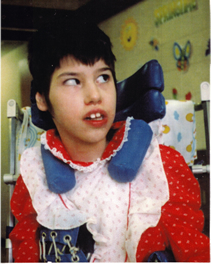
Tracy Latimer
The Latimer Case
The Latimer case directly concerned the rights of persons with disabilities. Mr. Latimer's view was that a parent has the right to kill a child with a disability if that parent decides the child's quality of life no longer warrants its continuation. CCD explained to the court and to the public how that view threatens the lives of people with disabilities and is deeply offensive to fundamental constitutional values. Learn more.